
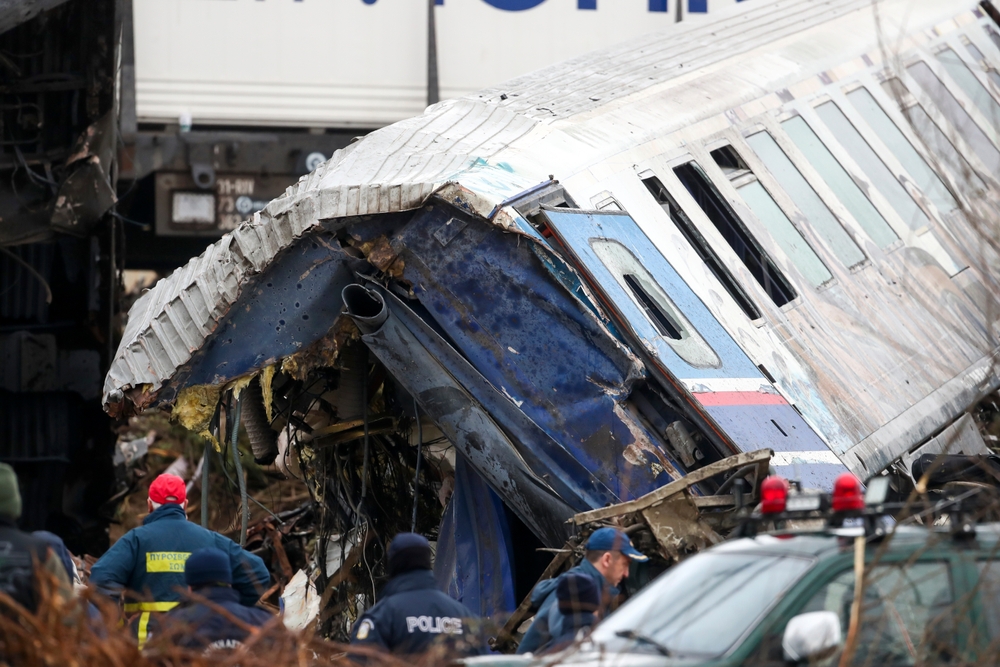
69 people have died so far after two high-speed trains collided in central Spain on Wednesday, October 28. The disaster is the country’s deadliest rail accident since 2013.
The crash happened at about 8:54 a.m. local time near Urda, in Toledo province, on the Madrid–Seville line. A Renfe train carrying passengers to Seville rear-ended a stationary Iryo train. Two carriages derailed and fell down an embankment. Regional president Emiliano García-Page said 24 of the first 68 victims were aboard the Renfe train and 44 were on the Iryo. The 69th victim later died in hospital.
As of Thursday, October 29, hospitals in Castilla-La Mancha had admitted 110 people. Of these, 60 had been discharged, while 50 remained hospitalized. The Civil Guard had received 64 missing-person reports. Spain’s foreign ministry said 42 foreign nationals were aboard the trains. Argentina confirmed that one of its citizens had died, while the US State Department said several Americans were injured.
Transport Minister Óscar Puente said controllers at Adif’s Atocha control center authorized the Renfe train to resume normal-speed travel at about 8:36 a.m., after a safety system failed, even though the Iryo train remained stopped ahead. He described the decision as “Inexplicable” and said the train should not have resumed under those conditions, when rules limited speed to 40 km/h.
A judge in Orgaz has ordered the seizure of the trains’ black boxes as part of the investigation. Police are gathering information from the Atocha control center and requesting Adif’s operating protocols. Investigators have not established a final cause for the collision.
Prime Minister Pedro Sánchez visited the crash site and declared three days of national mourning, through Saturday, October 31. “If there has been negligence, it will be known,” he said. He added that Spain could not accept two high-speed rail accidents in a single year.
Renfe suspended high-speed services between Madrid and Andalusia on Thursday and planned alternative services from Friday. Iryo canceled services from Madrid to southern Spain, while Ouigo suspended its services on the affected routes at least until Monday, November 2.
The crash is Spain’s second deadly high-speed rail disaster in less than a year. On January 18, an Iryo train derailed near Adamuz, in Córdoba province. Three of its rear carriages came off the track onto the adjacent line, where they were struck by an oncoming Renfe train, killing 46 people. The Civil Guard reported that the track had broken the previous night. Spain’s rail accident investigation commission, CIAF, has not completed its official investigation.
Spain has one of Europe’s largest high-speed rail networks, with more than 3,000 kilometers of dedicated track. In August 2025, the train drivers’ union Semaf called for a 250 km/h speed limit on several lines, citing vibrations and track wear. Adif said the lines were safe at current speeds. After the Adamuz crash, the union said it could not link its request to that accident. Officials have not established a link between those concerns and Wednesday’s collision.
